Tradition & Conservation
The Art of Beekeeping
For thousands of years, humans have shared a sacred bond with bees. We continue this tradition through practices that honour both ancient wisdom and modern understanding.
Our Philosophy
Working With Nature, Not Against It
Our approach to beekeeping is rooted in deep respect for the remarkable intelligence of the honeybee colony. We see ourselves as stewards, not masters, of these incredible creatures.
Bee-Centred Approach
We prioritise the natural behaviours and wellbeing of our colonies, allowing them to express their innate wisdom.
Chemical-Free Hives
Our hives are free from synthetic treatments. We work with nature to maintain healthy, resilient colonies.
Local Adaptation
We breed from locally-adapted stock, supporting bees that have evolved to thrive in our specific environment.
Minimal Intervention
We observe more than we interfere, trusting the colony's collective intelligence to manage their own affairs.
Historical Beekeeping
Echoes of Ancient Practice
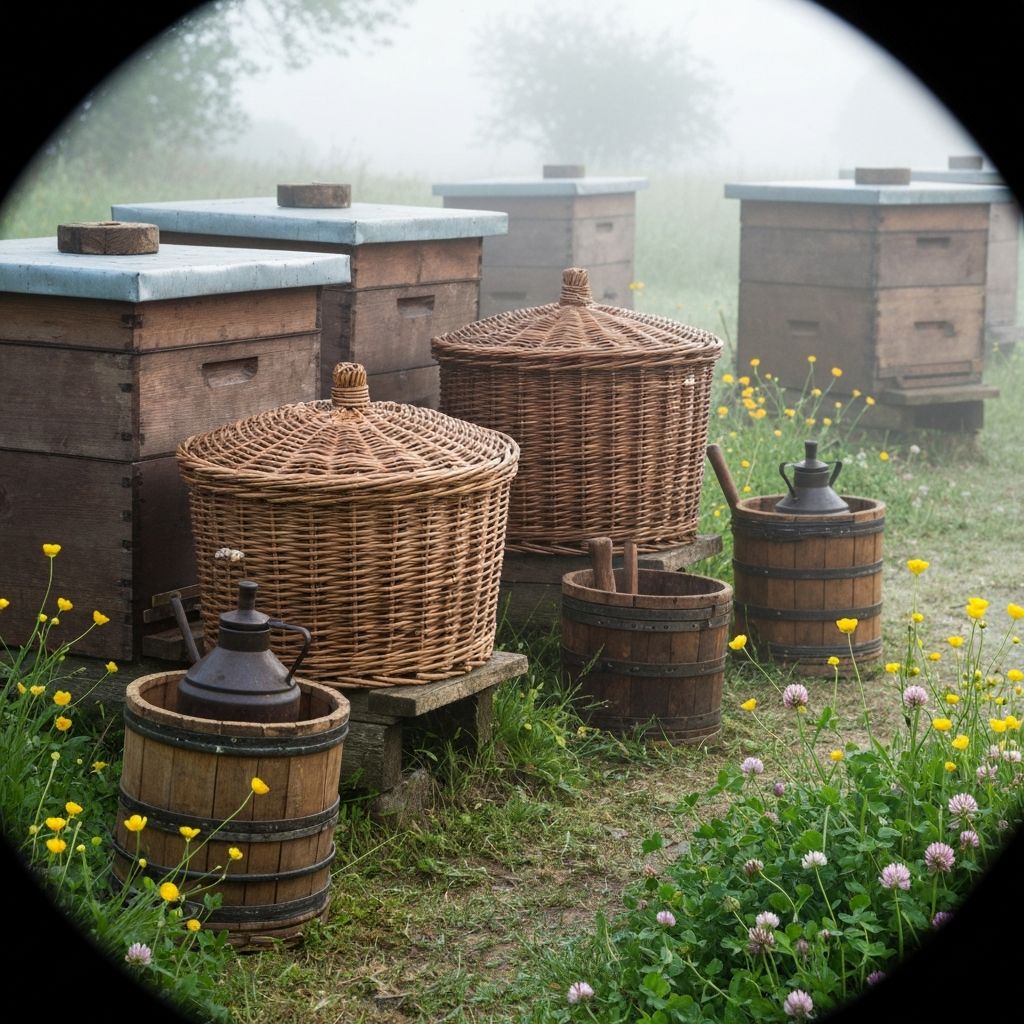
From the wicker skeps of medieval monasteries to the observation hives of early naturalists, beekeeping has evolved alongside human civilisation. We study and practice historical methods not merely as curiosities, but as windows into a deeper understanding of our relationship with bees. The straw skep, the log hive, the traditional methods of our ancestors — each holds lessons that modern beekeeping has often forgotten.
Explore Our WorkshopsConservation Beekeeping
Guardians of the Hive
In an age of declining pollinator populations, conservation beekeeping has never been more vital. Our methods focus on building strong, healthy colonies that can thrive without constant human intervention. We believe that truly sustainable beekeeping means creating conditions where bees can express their natural behaviours, build their own comb, raise their own queens, and develop resilience to local challenges.
Learn About Our ApproachThe Rhythm of the Year
Life in the Apiary
Spring
The colony awakens. Queens begin laying in earnest as the first flowers bloom. We check for health and ensure adequate space.
Summer
Peak activity. Foragers work tirelessly gathering nectar. The honey flow brings abundance, and swarm management becomes key.
Autumn
Preparations begin. The colony contracts, driving out drones. We ensure sufficient stores for the winter ahead.
Winter
The cluster forms. Bees survive on their honey stores, keeping warm through the coldest months. We observe from a respectful distance.
Experience Traditional Beekeeping
Join us for a workshop and discover the ancient art of working with bees. Learn sustainable practices that have been passed down through generations.